

【Dec. 17, 2024】Hiroshima University, Kasumi Campus (Hybrid), SOGOCHI Workshop
Here is the link to the details (in Japanese).
Here is the link to the details.
Details available here (internal use only).
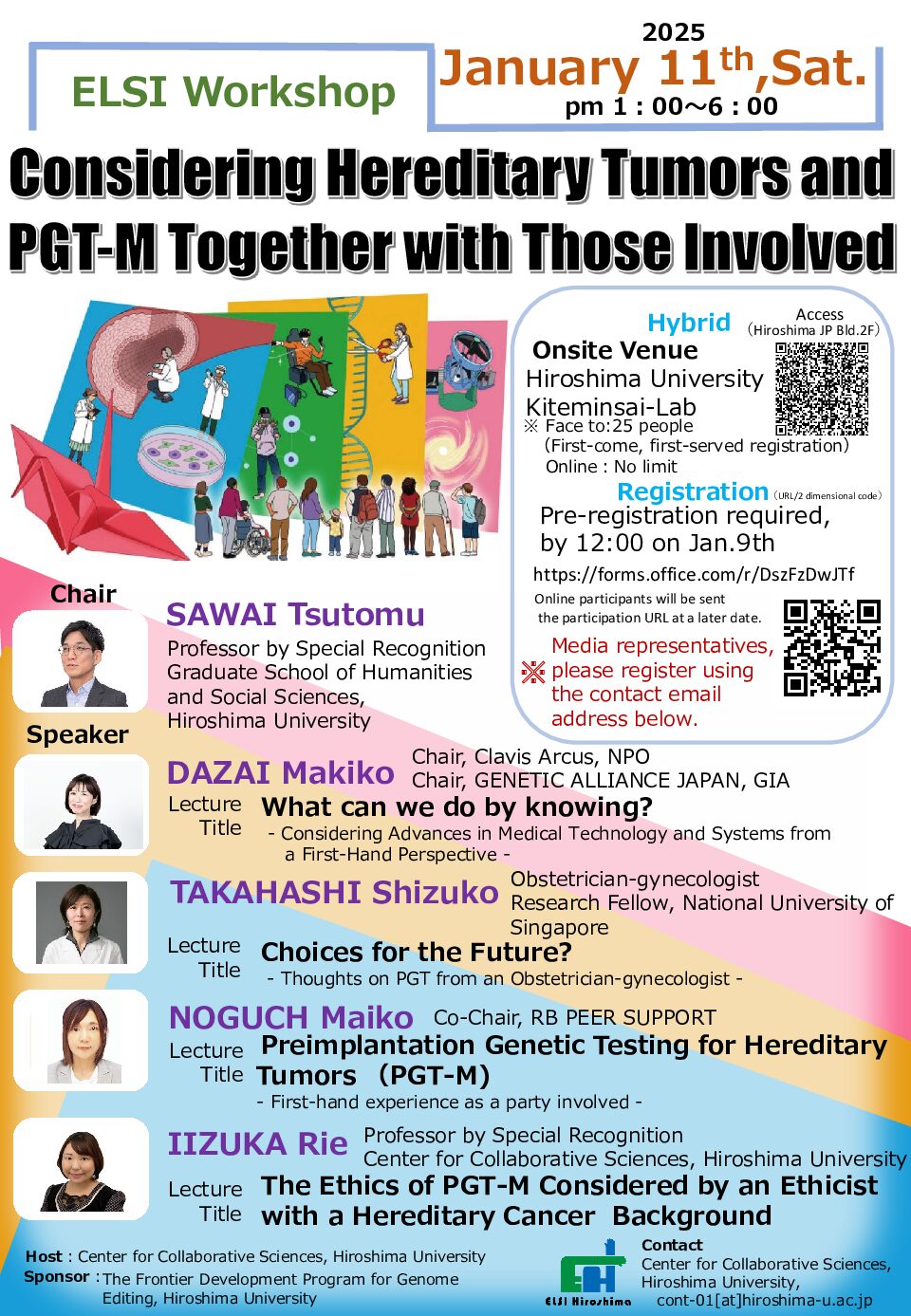
In this workshop, we will examine the challenges and benefits of the current PGT-M (preimplantation genetic testing for monogenic diseases) application system in Japan from the perspective of individuals affected by hereditary cancer. As we enter the era of personalized medicine, it is anticipated that more individuals with hereditary cancer will take an interest in PGT-M in the near future. To address this, the workshop aims to bridge informational gaps and ensure that these individuals have access to appropriate knowledge. Additionally, we will provide a platform for affected individuals to lead discussions on the current state of affairs. The workshop will feature presentations by four experts on hereditary tumors and PGT-M, followed by active discussions with participants. A representative from a patient advocacy group will share insights into the current situation, including insurance coverage for genetic testing, and discuss the anticipated increase in PGT-M-related inquiries within their organizations, along with strategies and future prospects for addressing these issues. A medical professional will provide an overview of the techniques involved in preimplantation genetic testing (PGT-A, PGT-SR, and PGT-M), focusing on their safety, patient burden, and historical background. An individual who has undergone the PGT-M application process through the Japan Society of Obstetrics...
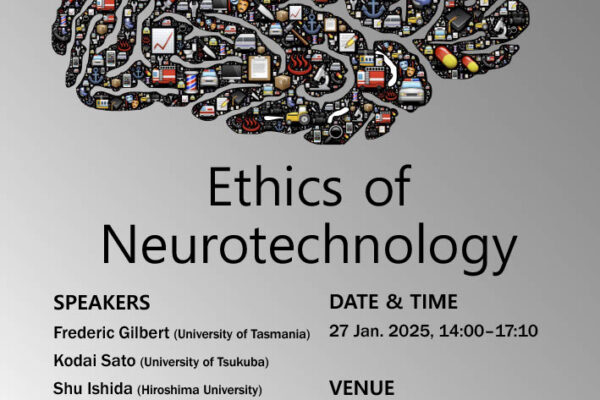
Here is the link to the details: https://medicine.nus.edu.sg/cbme/ethical-legal-and-social-issues-of-human-brain-organoid-research-and-application/
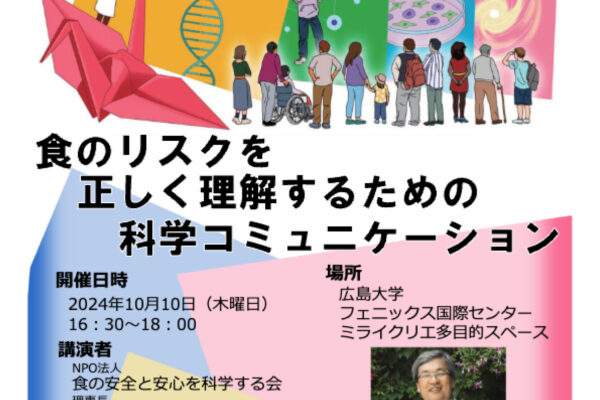
Speaker:Takeshi Yamasaki, Chairman, NPO Science of Food Safety and Security Many consumers have suffered health problems as a result of inadvertently consuming red yeast rice supplements that were promoted with claims such as “Lowers blood cholesterol with natural health foods.” On the other hand, despite appropriate risk assessment and risk management being conducted, genetically modified and genome-edited foods tend to be avoided by consumers due to concerns like “Will they cause unforeseen diseases in the future?” or “Are they dangerous because they are subject to legal regulation?” These phenomena are due to consumer risk perception bias, but at the same time, there is a need for attention to ethical, legal, and social issues (ELSI) on a societal level, as well as the practice of responsible research and innovation (RRI). In this lecture, in addition to discussing science communication methods to correct consumer risk perception bias, I would like to engage with you on how research and innovation should fulfill social responsibility.
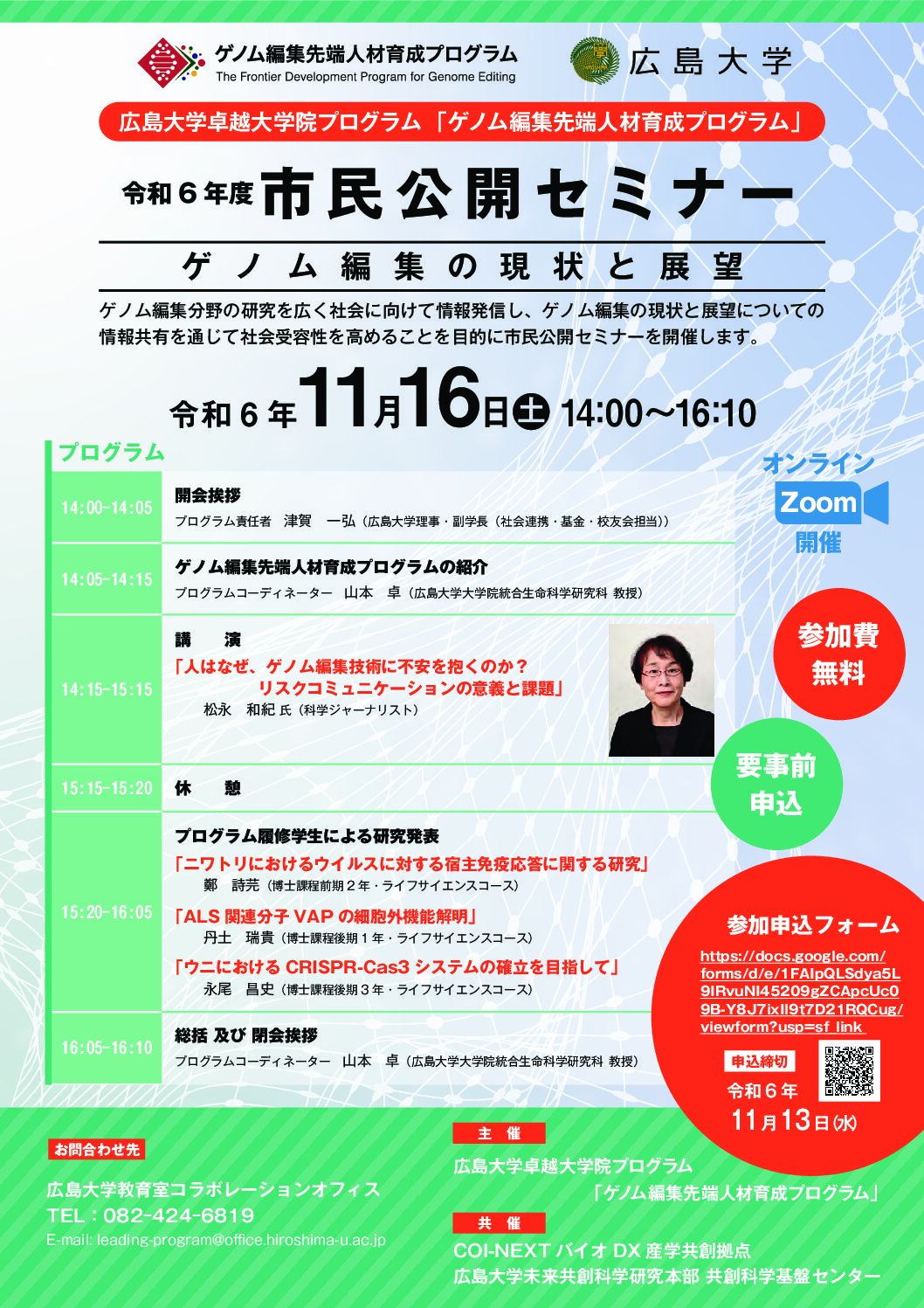
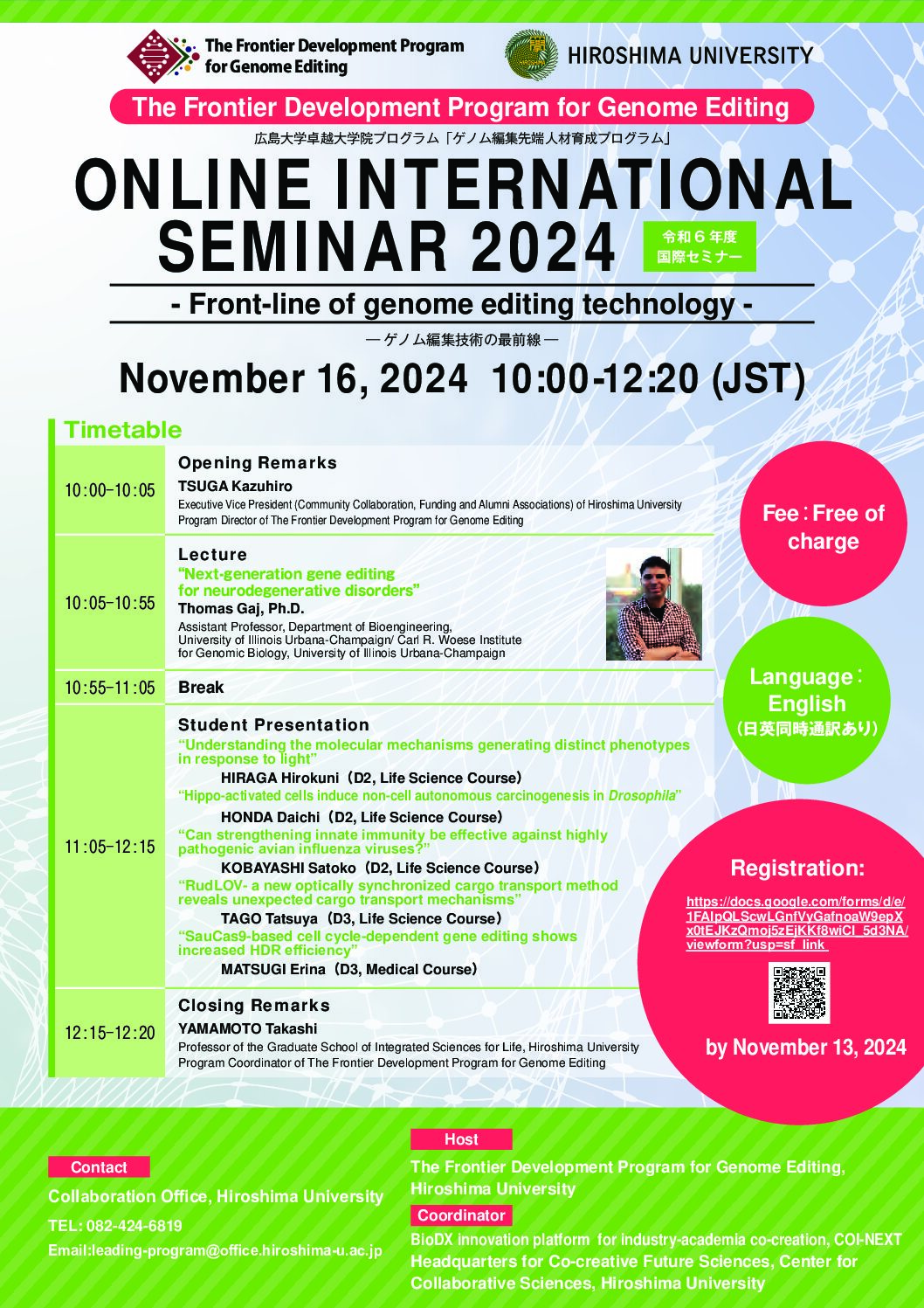
Speaker:Kazushi Aoto, Associate Professor(Graduate School of Biomedical and Health Sciences, Hiroshima University) Using the i-GONAD method, a simple approach for generating mutant mice by combining CRISPR-Cas9 genome editing and electroporation, we have produced numerous human disease model mice and rats and conducted pathogenesis analyses. In this seminar, we will focus on the creation and pathogenesis analysis of a model mouse for epileptic encephalopathy. Additionally, we will also introduce attempts at gene therapy using genome editing with the generated model mice.
Speaker:Shinichi Arimura, Professor(Graduate School of Agricultural and Life Sciences, The University of Tokyo) Genomic information in organisms is also present, albeit in small amounts, within chloroplasts and mitochondria. These organellar genomes, which code for crucial information related to photosynthesis, respiration, mitochondrial diseases, and crop production, could not be modified until recently. However, breakthroughs have occurred with genome editing technologies, leading to rapid advancements in both basic and applied research. The current state of the technology and examples/potential uses were introduced.